
Workers narrowly avoided injury after a chain block and 190-kilogram steel plate fell more than 10 metres during refurbishment work on a leach tank.
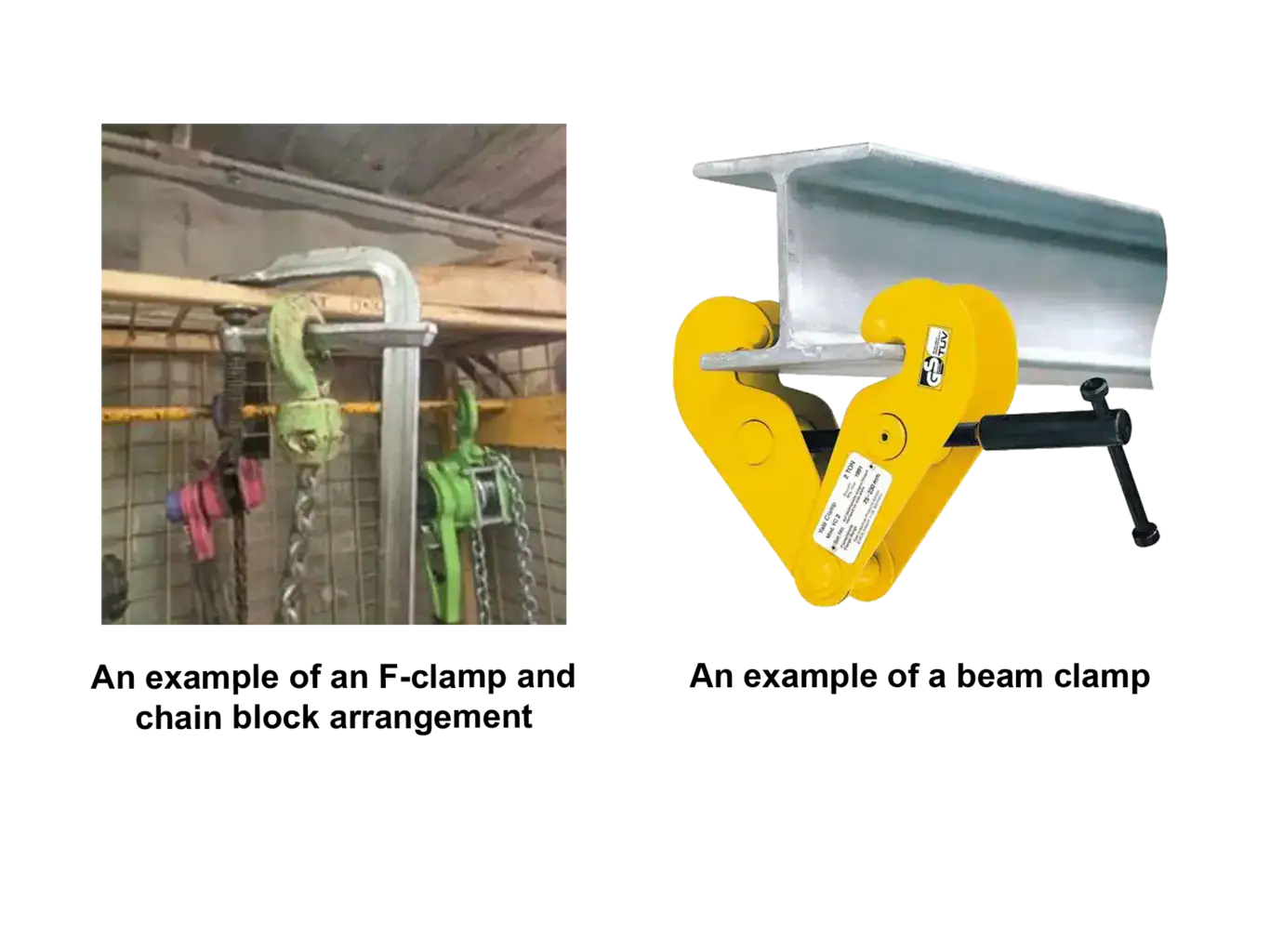
Maintenance workers were reinstalling the steel plate on the tank’s upper ring when they substituted an F-clamp for a beam clamp specified in the approved lifting method. The manufacturer did not design, rate or approve the F-clamp for lifting or load suspension. Workers observed movement in the hand-tightened clamp, briefly stopped work and re-tightened it before resuming the task. Shortly afterwards, the clamp detached from the beam, causing the chain block and steel plate to fall to the tank floor below.
The incident shows how substituting equipment in high-risk lifting tasks can undermine critical controls when workers do not reassess the lifting method and verify that lifting equipment is suitable for its intended purpose. Workers can increase their exposure to dropped-object hazards when they continue lifting activities after identifying signs that lifting arrangements may be failing.
Takeaways
- Plan lifts in detail: Identify lifting equipment, anchorage methods, load paths, support arrangements and critical controls before starting work.
- Verify suspension and anchorage points: Confirm all lifting attachment points are suitable, secure and capable of supporting the intended load.
- Use equipment only for its intended purpose: Select lifting devices and anchorage equipment, inspect them before use and verify they can safely support the intended load.
- Maintain effective supervision: Actively supervise high-risk lifting activities to verify workers follow approved controls and work methods.
- Reassess changes to lifting methods: Stop work and reassess risks whenever workers change a lifting method or substitute equipment.
- Encourage intervention: Empower workers to stop work immediately when they identify unsafe conditions, equipment substitutions or control failures.
